
Computer technology continues to evolve at an extraordinary pace. From artificial intelligence and high-performance processors to cloud computing and next-generation cybersecurity, modern computers are becoming faster, smarter, and more capable than ever before.
In 2026, computers are no longer simply tools for browsing the internet, creating documents, or running applications. They have become powerful platforms for artificial intelligence, content creation, scientific research, business operations, gaming, communication, and countless other activities.
Understanding the latest developments in computer technology can help consumers and businesses make smarter decisions in an increasingly digital world.
The Evolution of Modern Computers
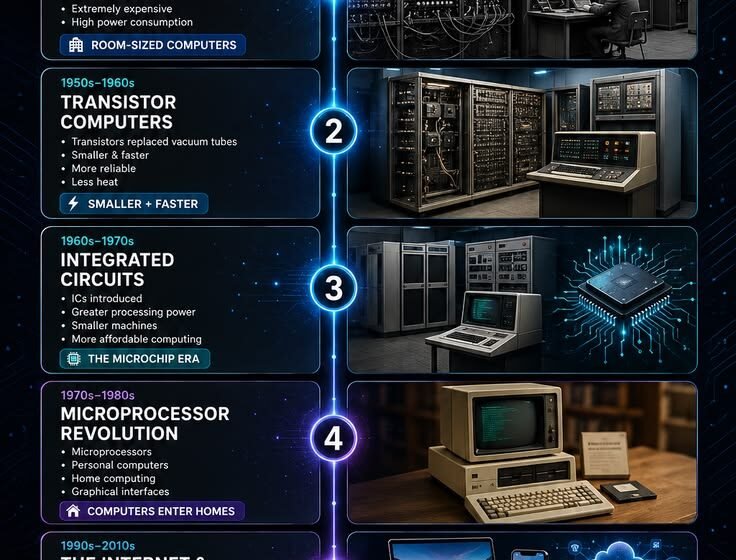
The computer industry has changed dramatically over the past several decades. Traditional desktop computers have evolved into powerful workstations, lightweight laptops, compact mini PCs, and increasingly intelligent devices.
Modern computers combine powerful processors, advanced graphics, fast storage, high-speed memory, and sophisticated software to deliver significantly better performance.
At the same time, energy efficiency has become an important part of computer design. Manufacturers are focusing on delivering higher performance while reducing power consumption, heat generation, and battery usage.
AI-Powered Computers Are Becoming the New Standard
One of the biggest developments in computer technology is the integration of Artificial Intelligence (AI) directly into personal computers.
Modern processors increasingly include dedicated AI capabilities designed to handle certain machine-learning workloads efficiently.
AI-powered computers can support features such as intelligent image processing, background noise removal, real-time translation, productivity assistance, content creation, and other AI applications.
As AI software becomes more common, dedicated AI hardware is expected to become an increasingly important part of personal computing.
Next-Generation Processors
Processors remain at the heart of computer performance.
Modern CPU designs are becoming more efficient by combining powerful processing cores with specialized hardware designed for specific workloads.
The competition among major chip manufacturers is also driving improvements in performance, efficiency, integrated graphics, and AI processing.
For everyday users, these improvements can result in faster application launches, smoother multitasking, better battery life, and improved overall system responsiveness.
Faster and Smarter Storage
Storage technology has also experienced major improvements.
Traditional hard disk drives are increasingly being replaced by solid-state drives (SSDs), which offer significantly faster data access and improved responsiveness.
Modern NVMe SSDs can provide extremely high transfer speeds, making them particularly useful for demanding workloads such as video editing, gaming, software development, and large-scale data processing.
As storage technology continues to improve, computers are becoming faster at starting applications, transferring files, and handling large datasets.
The Growing Importance of Cloud Computing
Cloud computing has changed the way people use computers.
Instead of storing everything locally, users can access applications, files, databases, and computing resources through internet-connected cloud platforms.
Businesses use cloud computing for data storage, collaboration, software development, artificial intelligence, backup systems, and remote work.
Cloud technology also allows organizations to scale computing resources according to their requirements without necessarily building and maintaining all infrastructure themselves.
Cybersecurity Is More Important Than Ever
As computers become more connected, cybersecurity has become a critical part of modern computing.
Cyber threats can target individuals, businesses, governments, and organizations through malware, phishing attacks, data breaches, ransomware, and other techniques.
Modern computers increasingly rely on hardware-based security features, encryption, biometric authentication, secure boot technologies, and continuously updated security software.
However, technology alone cannot eliminate every threat. Users should also maintain strong passwords, enable multi-factor authentication, install security updates, and avoid suspicious links and files.
Computers for Gaming and Content Creation
Computer technology is also advancing rapidly in gaming and creative work.
Modern graphics processing units (GPUs) can deliver high-performance rendering for games, 3D applications, video editing, animation, and AI workloads.
Technologies such as real-time ray tracing and AI-based image enhancement are improving visual quality while helping developers create increasingly detailed digital environments.
For content creators, powerful computers can significantly reduce rendering and processing times, making professional workflows more efficient.
The Future of Laptops
Laptops are becoming thinner, lighter, and more powerful.
Modern laptop designs increasingly focus on battery efficiency, high-resolution displays, fast connectivity, improved cooling systems, and AI capabilities.
For professionals and students, this means powerful computing performance can be available in portable devices without requiring a traditional desktop setup.
The future of laptops will likely focus on combining mobility, performance, battery life, and intelligent software features.
Quantum Computing: The Long-Term Revolution
While traditional computers continue to dominate everyday computing, quantum computing represents a completely different approach.
Quantum computers use quantum mechanical principles to process information in ways that differ from conventional computers.
The technology is still developing and is not expected to replace everyday PCs in the near future. However, quantum computing could eventually have major applications in areas such as scientific research, optimization, materials science, and cryptography.
Green and Sustainable Computing
Energy efficiency is becoming an increasingly important consideration in computer technology.
Data centers and high-performance computing systems can consume substantial amounts of electricity. As demand for AI and cloud services grows, technology companies are investing in more efficient processors, cooling technologies, renewable energy, and optimized data-center infrastructure.
For consumers, energy-efficient computers can also provide practical benefits such as longer laptop battery life and lower power consumption.
What Does the Future of Computer Technology Look Like?
The future of computing will likely be defined by the combination of AI, advanced processors, high-speed storage, cloud computing, cybersecurity, and specialized hardware.
Computers are expected to become more intelligent and increasingly capable of understanding user needs and automating repetitive tasks.
Rather than simply becoming faster, future computers will become more personalized, connected, energy-efficient, and capable of handling sophisticated AI workloads.
Final Thoughts
Computer technology is entering an exciting new era.
AI-powered PCs, advanced processors, faster SSDs, powerful GPUs, cloud computing, improved cybersecurity, and emerging technologies such as quantum computing are reshaping the way people interact with computers.
For consumers, these developments mean better performance and more intelligent devices. For businesses, they create opportunities for automation, productivity, and innovation.
The computer of the future will not simply be a faster version of today’s machine. It will be a smarter, more connected, energy-efficient, and AI-driven platform capable of becoming an increasingly important part of everyday life.