
Meta Title: Latest Technology Trends in 2026: Top 10 Innovations
Meta Description: Discover the latest technology trends in 2026, including artificial intelligence, AI agents, robotics, cybersecurity, cloud computing, and emerging digital innovations.
Focus Keyword: Latest Technology Trends in 2026
Introduction
Technology continues to transform the world at an incredible pace. In 2026, businesses, students, professionals, and everyday users are increasingly relying on digital solutions to improve productivity, simplify tasks, and solve complex problems. From artificial intelligence (AI) to advanced robotics, modern innovations are creating new opportunities across almost every industry.
The latest technology trends in 2026 are not just about developing faster computers or smarter applications. They are also about making technology more intelligent, secure, efficient, and useful in real-world situations. Organizations are moving beyond experimenting with AI and focusing on practical applications that deliver measurable results. Recent industry research highlights AI agents, physical AI, advanced computing infrastructure, and cybersecurity as important areas to watch.
In this article, we explore 10 major technology trends in 2026, explain how they work, and examine why they matter for the future.
1. Artificial Intelligence (AI)
Artificial intelligence is one of the most influential technology trends in 2026. AI systems can analyze information, recognize patterns, generate content, answer questions, and assist with complex tasks.
Businesses are using AI-powered tools to improve customer support, automate repetitive work, analyze data, and support decision-making. Individuals can use AI for writing, research, learning, coding, and productivity.
Generative AI is also changing how digital content is created. Modern tools can generate text, images, audio, videos, and software code from user instructions.
However, AI-generated information is not always accurate. Human review, data privacy, transparency, and responsible implementation remain essential.
2. AI Agents and Autonomous Systems
AI agents are becoming an important part of the technology landscape. These systems can interpret instructions, plan actions, use digital tools, and complete multiple steps toward a defined goal.
For example, an AI agent may help organize a schedule, summarize documents, analyze business information, or assist with software development. In organizations, specialized agents can support customer service, research, and administrative workflows.
In 2026, businesses are exploring ways to integrate AI agents into their existing operations. Nevertheless, widespread adoption still faces challenges involving reliability, security, cost, and accountability.
Companies need clear permissions, appropriate safeguards, and human supervision to ensure that AI agents operate safely and produce useful results.
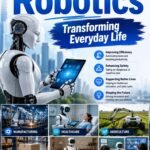
3. Physical AI and Robotics
Artificial intelligence is increasingly moving beyond computer screens and into the physical world. Physical AI combines intelligent software with robots, sensors, cameras, and machines that can interact with their surroundings.
In manufacturing, robots can support assembly, inspection, and material handling. In agriculture, intelligent machines may help monitor crops, identify weeds, and perform selected farming operations. Warehouses can use robotic systems to transport goods and organize inventory.
These applications can improve efficiency and reduce repetitive manual work. However, implementation costs, maintenance, safety, and the complexity of real-world environments continue to influence adoption.
As robotics develops, cooperation between people and intelligent machines will remain an important consideration.
4. Cybersecurity and AI-Powered Security
As digital services expand, cybersecurity has become essential for businesses, governments, and individuals. Cyber threats include phishing, ransomware, identity theft, data breaches, and fraudulent online activities.
AI-powered security systems can analyze network activity, identify unusual patterns, detect suspicious behavior, and help security teams investigate threats more efficiently.
At the same time, criminals may use AI to create convincing scams and automate certain attacks. This makes strong security practices increasingly important.
Organizations should invest in multifactor authentication, regular software updates, secure backups, employee training, and access controls. AI security tools should also be monitored carefully because automation can introduce new risks.
In 2026, effective cybersecurity requires a combination of advanced technology, skilled professionals, and responsible security management.
5. Cloud Computing and Edge Computing
Cloud computing allows users to access computing resources, applications, and storage through the internet. It helps organizations scale their services without maintaining all their own physical infrastructure.
Businesses use cloud platforms for website hosting, data storage, software development, collaboration, and AI applications.
Edge computing complements cloud computing by processing information closer to where it is generated. This approach can reduce delays and improve performance for applications that require rapid responses.
For example, smart factories, connected vehicles, and industrial monitoring systems may benefit from edge computing because they often need to process data quickly.
In 2026, organizations are increasingly evaluating cloud and edge solutions based on cost, performance, security, and specific business requirements.
6. Quantum Computing
Quantum computing is an emerging technology that uses principles of quantum mechanics to process information differently from conventional computers.
Researchers are investigating its potential applications in scientific simulations, materials discovery, optimization, chemistry, and selected cryptographic problems.
Unlike traditional computers, quantum computers are designed to solve certain specialized problems using quantum systems. They are not expected to replace ordinary computers for everyday tasks.
Although quantum computing continues to advance, many practical applications still face significant technical challenges. Hardware reliability, error correction, scalability, and cost remain important research areas.
In 2026, quantum computing is a technology worth following because future breakthroughs could influence scientific research and specialized industries.
7. Internet of Things (IoT) and Smart Devices
The Internet of Things, commonly known as IoT, connects physical devices to digital networks so they can collect, share, and sometimes act on data.
Examples include smart home appliances, wearable devices, connected vehicles, industrial sensors, and agricultural monitoring equipment.
IoT technology can help businesses monitor equipment, track resources, and identify problems before they become serious. Farmers may use connected sensors to monitor soil moisture and weather conditions, while homeowners can manage lighting and temperature through smart devices.
When combined with AI, IoT systems can provide more useful insights and support automated decisions.
However, device security, privacy protection, reliable connectivity, and regular software updates are essential for safe and effective IoT adoption.
8. Green Technology and Sustainable Computing
Green technology is gaining attention as organizations look for ways to reduce environmental impact and improve energy efficiency.
The expansion of AI and cloud computing has increased the importance of efficient data centers, advanced cooling systems, and energy-conscious hardware.
Important developments include renewable energy, battery storage, smart electricity grids, energy-efficient processors, and technologies designed to reduce waste.
Businesses can also improve sustainability by optimizing their IT infrastructure, extending device lifespans, and monitoring energy consumption.
In 2026, green technology represents an opportunity to combine innovation with more responsible resource management. The long-term benefits will depend on practical implementation, affordability, and measurable environmental improvements.
9. Augmented Reality (AR) and Virtual Reality (VR)
Augmented reality and virtual reality are changing how people interact with digital information.
Augmented reality adds digital elements to the real world, while virtual reality creates immersive digital environments. These technologies can support education, professional training, product design, entertainment, and remote collaboration.
For example, students can explore interactive learning environments, engineers can examine digital product models, and employees can practice selected tasks in simulated workplaces.
Spatial computing is also helping connect digital content with physical environments.
Although these technologies offer promising applications, widespread adoption depends on device prices, comfort, software availability, and whether they provide clear advantages over traditional tools.
10. Digital Transformation and the Future of Work
Digital transformation involves using modern technology to improve business processes, customer experiences, and organizational performance.
Companies are adopting cloud platforms, AI-powered applications, automation, and data analytics to make operations more efficient.
The future of work is also changing as technology takes over certain repetitive tasks and helps employees complete others more effectively. New opportunities may grow in fields such as AI development, cybersecurity, data analysis, cloud engineering, and technology management.
However, successful digital transformation requires more than purchasing new software. Organizations need trained employees, effective planning, strong data governance, and clear business objectives.
Professionals can prepare by developing digital skills, learning to work with AI tools, and strengthening their communication, analytical, and problem-solving abilities.
Benefits of the Latest Technology Trends in 2026
Modern technology offers several potential benefits across different industries.
- Improved productivity: Automation can reduce time spent on repetitive tasks.
- Better decision-making: Data analytics can help organizations identify patterns and opportunities.
- Enhanced customer experiences: Intelligent tools can support faster and more personalized services.
- Stronger security: Modern security systems can help detect and respond to threats.
- New career opportunities: Emerging technologies create demand for specialized technical skills.
- Greater efficiency: Cloud services and connected systems can help organizations manage resources more effectively.
The results depend on how well each technology is implemented and whether it addresses a genuine need.
Challenges of Emerging Technologies
Despite their benefits, emerging technologies also introduce challenges that individuals and businesses must understand.
Privacy and data protection: Digital systems may process sensitive personal or business information.
Cybersecurity risks: Connected devices and automated systems can introduce additional vulnerabilities.
Implementation costs: Advanced technologies may require investment in hardware, software, training, and maintenance.
Skills shortages: Organizations need employees who understand how to deploy and manage modern systems.
Ethical concerns: AI systems may produce inaccurate results or make decisions that require human review.
Addressing these challenges through responsible planning, security controls, and continuous learning can help organizations use technology more effectively.
How to Prepare for Future Technology Trends
You do not need to become an expert in every new technology to benefit from digital innovation. Instead, focus on skills and tools that support your personal or professional goals.
- Learn AI tools: Explore how AI can help with research, writing, productivity, and problem-solving.
- Improve cybersecurity awareness: Use strong passwords, multifactor authentication, and trusted software.
- Develop digital skills: Consider learning programming, data analysis, cloud computing, or website development.
- Follow reliable technology news: Read industry reports and reputable research instead of relying only on social media claims.
- Practice continuously: Apply what you learn through personal projects, online courses, or practical work.
- Adapt to change: Stay open to new tools while evaluating their accuracy, usefulness, and risks.
These steps can help students, professionals, entrepreneurs, and business owners prepare for an increasingly digital world.
Conclusion
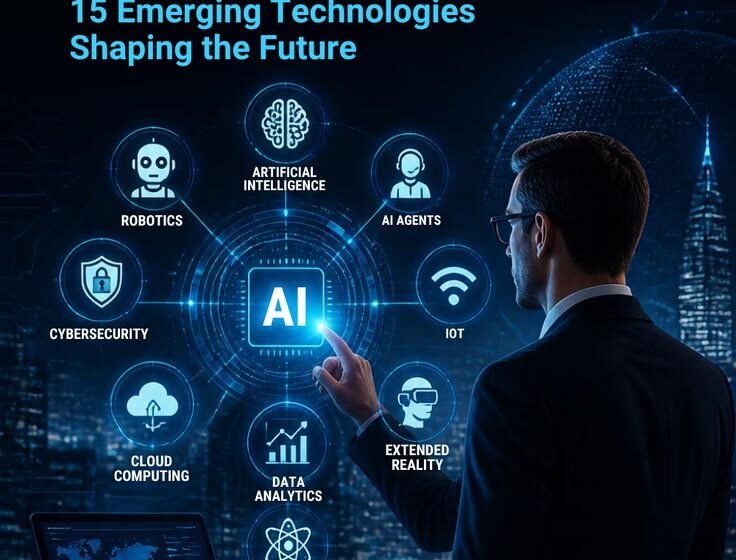
The latest technology trends in 2026 demonstrate how rapidly the digital world is evolving. Artificial intelligence, AI agents, physical AI, robotics, cybersecurity, cloud computing, quantum computing, and sustainable technology are influencing how people work, learn, communicate, and conduct business.
These technologies offer opportunities to improve productivity, develop new services, and solve complex problems. However, their success depends on reliability, security, affordability, and responsible implementation.
For individuals, developing practical digital skills is an important step toward preparing for future opportunities. For businesses, the priority should be selecting technologies that solve real problems and deliver measurable value.
By staying informed and embracing continuous learning, readers can better understand emerging innovations and make smarter decisions in the changing world of technology.
Frequently Asked Questions (FAQs)
What are the biggest technology trends in 2026?
Major trends include artificial intelligence, AI agents, physical AI, robotics, cybersecurity, cloud computing, quantum computing, the Internet of Things, and sustainable technology.
Why is artificial intelligence important in 2026?
AI helps people and organizations analyze information, automate tasks, create content, support research, and improve productivity. Its value depends on accuracy, responsible use, and appropriate human oversight.
What is physical AI?
Physical AI refers to AI systems that enable machines and robots to perceive their environment, interpret information, and interact with the physical world.
Which technology skills are useful to learn in 2026?
Useful skills include AI literacy, cybersecurity, programming, cloud computing, data analysis, and digital problem-solving. The best choice depends on your interests and career objectives.
Will technology replace human jobs?
Technology can automate some tasks and change the responsibilities of certain jobs. It can also create new roles and increase demand for technical and human skills. The overall impact varies by occupation and industry.
How can businesses benefit from emerging technology?
Businesses can use suitable technologies to improve productivity, analyze data, enhance customer service, strengthen security, and develop new products or services.
What is the future of technology?
The future will likely involve more intelligent software, connected devices, advanced robotics, improved computing infrastructure, and stronger attention to cybersecurity and sustainability. The pace of adoption will vary across industries.