Advantages of Information Technology in 2026: How IT Is Transforming the Modern World

Introduction
Information Technology (IT) has become an essential part of modern life. From communication and education to healthcare, business, and finance, IT is transforming how people work, learn, communicate, and solve problems. In 2026, rapid advancements in artificial intelligence (AI), cloud computing, cybersecurity, automation, and data analytics are creating new opportunities for individuals and organizations worldwide.
Information technology enables businesses to improve productivity, reduce operational costs, manage information efficiently, and deliver better services. As digital transformation continues to accelerate, understanding the advantages of information technology is increasingly important for students, professionals, entrepreneurs, and businesses.
In this article, we explore the major advantages of information technology in 2026 and explain how IT is shaping the future.
1. Faster and More Efficient Communication
One of the biggest advantages of information technology is faster communication. Digital tools such as email, video conferencing, instant messaging, and collaboration platforms allow people to communicate from almost anywhere in the world.
Businesses can connect with employees, customers, and partners in real time. Remote teams can collaborate on projects without needing to work in the same physical location.
In 2026, modern communication technologies and AI-powered tools are making digital collaboration more efficient, helping organizations save time and improve teamwork.
2. Increased Productivity and Efficiency
Information technology helps individuals and businesses complete tasks more quickly and accurately. Software applications, automated workflows, and AI-powered systems can handle repetitive activities, allowing employees to focus on more valuable work.
For example, businesses can use digital accounting software, project management tools, and automated customer support systems to streamline daily operations.
Improved efficiency can lead to better resource management, faster decision-making, and increased productivity across different industries.
3. Better Access to Education and Online Learning
Information technology has made education more accessible to people around the world. Students can attend online classes, access digital libraries, watch educational videos, and participate in virtual training programs.
Learning management systems and AI-powered educational tools can help learners understand complex subjects and practice new skills at their own pace.
In 2026, digital education continues to provide opportunities for people who cannot easily attend traditional educational institutions. It also helps professionals develop new skills in areas such as programming, artificial intelligence, digital marketing, and cybersecurity.
4. Improved Business Operations
Information technology plays a critical role in modern business management. Companies use IT systems to manage inventory, track sales, maintain customer records, process transactions, and analyze performance.
Enterprise software and cloud-based platforms allow organizations to coordinate different departments and access important information more efficiently.
Small businesses can also benefit from affordable digital tools that help them build websites, manage online stores, communicate with customers, and compete in digital markets.
By adopting suitable IT solutions, businesses can improve operational efficiency and provide better customer experiences.
5. Reduced Operational Costs
Another major advantage of information technology is its potential to reduce business expenses. Digital systems can minimize paperwork, automate repetitive processes, and reduce the need for certain manual tasks.
Cloud computing allows organizations to access computing resources without necessarily purchasing and maintaining all their own hardware. Remote working tools can also reduce some office-related expenses.
However, businesses must consider software subscriptions, cybersecurity, employee training, and maintenance costs when investing in technology.
When implemented effectively, IT can help organizations use their budgets and resources more efficiently.
6. Enhanced Data Storage and Management
Modern organizations generate large amounts of information every day. Information technology provides tools to store, organize, retrieve, and analyze this data.
Databases, cloud storage, and digital document management systems make it easier to maintain records and access information when needed.
Businesses can use data analytics to identify customer preferences, monitor performance, and recognize potential opportunities.
Reliable data management also requires appropriate access controls, regular backups, and privacy protection to prevent unauthorized access and data loss.
7. Better Decision-Making Through Data Analytics
Information technology helps businesses make informed decisions by converting raw data into useful insights.
Data analytics platforms can identify patterns in sales, customer behavior, market demand, and operational performance. Artificial intelligence can also assist with forecasting and identifying trends when suitable data is available.
For example, a retailer can analyze previous sales to estimate future demand and manage inventory more effectively.
Although technology can support decision-making, human judgment remains important. Organizations should verify data quality and consider limitations before acting on automated recommendations.
8. Improved Healthcare Services
Information technology has significantly improved healthcare administration and patient care. Electronic health records, telemedicine platforms, digital diagnostic tools, and medical information systems help healthcare professionals manage information and communicate more efficiently.
Patients may be able to consult healthcare providers remotely, access medical records, and receive follow-up support through digital platforms.
AI-assisted tools can also help healthcare professionals analyze certain medical information, although clinical decisions require appropriate professional oversight.
In 2026, the responsible use of IT continues to create opportunities to improve healthcare access, coordination, and efficiency while protecting sensitive patient information.
9. Advanced Cybersecurity and Data Protection
As more activities move online, cybersecurity has become an essential part of information technology. Organizations must protect their systems, customer information, financial records, and digital services against cyber threats.
Modern security solutions include multifactor authentication, encryption, endpoint protection, secure cloud infrastructure, and AI-assisted threat detection.
Businesses can strengthen their security by regularly updating software, training employees, monitoring suspicious activity, and maintaining secure backups.
Technology cannot eliminate every cyber risk, but a well-planned cybersecurity strategy can reduce vulnerabilities and improve resilience.
10. Growth of Remote Work and Global Collaboration
Information technology has made remote and hybrid work more practical for many professions. Employees can access authorized company systems, attend online meetings, share documents, and collaborate with colleagues across different locations.
These tools can help businesses recruit talent from a wider geographic area and give workers more flexibility.
Remote work also requires reliable internet access, clear communication, effective management, and strong security practices. When these elements are in place, IT can support collaboration and productivity beyond traditional office environments.
11. Growth of E-Commerce and Digital Marketing
Information technology has transformed how businesses sell products and promote services. E-commerce websites, mobile applications, digital payment systems, and online advertising enable companies to reach customers through digital channels.
Search engine optimization (SEO), social media marketing, email campaigns, and analytics tools help businesses understand their audiences and improve marketing strategies.
In 2026, AI-assisted content tools and customer analytics can support marketing activities, but successful campaigns still depend on useful content, accurate information, customer trust, and a clear understanding of market needs.
For startups and small businesses, digital platforms can provide opportunities to reach customers without relying entirely on physical stores.
12. Innovation Through Artificial Intelligence and Automation
Artificial intelligence and automation are among the most important technology developments influencing information technology in 2026.
AI-powered systems can assist with writing, research, data analysis, software development, customer service, and workflow management. Automation tools can perform predefined tasks with less manual intervention.
These technologies may help organizations improve efficiency and develop new products and services. They can also introduce challenges involving accuracy, privacy, employment, and responsible use.
Businesses should evaluate AI tools carefully, protect confidential information, and maintain human oversight for important decisions.
13. Better Customer Service and User Experience
Information technology helps businesses understand and serve their customers more effectively. Customer relationship management (CRM) systems organize customer information, while chatbots and support platforms can answer common questions and direct users to appropriate services.
Websites and mobile applications also allow customers to access products, services, and support more conveniently.
Organizations can use customer feedback and service analytics to identify problems and improve their offerings. However, automated systems should provide clear ways for customers to contact a human representative when necessary.
14. More Career and Employment Opportunities
The expansion of information technology has created demand for professionals with digital skills. Career opportunities include software development, IT support, cloud computing, data analytics, cybersecurity, network administration, and AI-related fields.
People can begin developing these skills through online courses, practical projects, certifications, internships, and formal education.
In 2026, continuous learning is particularly valuable because technology and workplace requirements keep changing. Building strong technical foundations alongside communication, problem-solving, and critical-thinking skills can improve career prospects.
15. Environmental Benefits Through Digital Solutions
Information technology can contribute to environmental efficiency when used responsibly. Digital documents can reduce paper consumption, remote meetings can reduce some business travel, and data analytics can help organizations monitor energy use.
Smart systems can also support more efficient resource management in buildings, agriculture, transportation, and manufacturing.
Nevertheless, digital technologies consume electricity and require physical equipment. Data centers, electronic waste, and device manufacturing can create environmental challenges. Sustainable IT practices should therefore include energy efficiency, equipment repair, responsible recycling, and appropriate resource management.
Challenges and Limitations of Information Technology
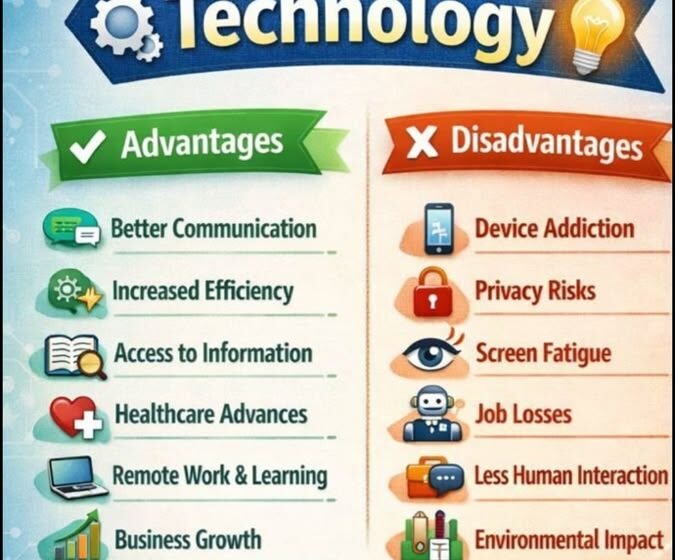
Despite its many advantages, information technology also presents challenges that individuals and organizations must consider.
Some common challenges include:
- Cybersecurity threats: Systems may face hacking, phishing, malware, and data breaches.
- Privacy concerns: Personal information can be misused if it is not properly protected.
- Implementation costs: Hardware, software, training, and maintenance require investment.
- Digital inequality: Not everyone has reliable internet access or suitable devices.
- Technical dependence: System failures can interrupt essential services and business operations.
- Skills gaps: Employees and students may need ongoing training to use new technologies effectively.
- AI-related risks: Automated systems can produce inaccurate results or reflect biases in their data.
Organizations can address these challenges through careful planning, employee education, secure system design, regular maintenance, and responsible technology policies.
The Future of Information Technology
The future of information technology will continue to be influenced by artificial intelligence, cloud computing, automation, advanced connectivity, data analytics, and cybersecurity.
Businesses are likely to place greater emphasis on integrating digital systems, protecting information, and using data to improve operations. Educational institutions may expand digital learning, while healthcare and other industries continue exploring new technology-based services.
However, successful digital transformation will require more than adopting the latest tools. Organizations must ensure that their technology investments solve real problems, deliver measurable value, and respect privacy and security.
People who develop digital literacy and adapt to changing technologies will be better prepared to participate in an increasingly connected world.
Conclusion
Information technology offers significant advantages in 2026, including faster communication, higher productivity, improved education, better healthcare services, efficient data management, enhanced cybersecurity, and new career opportunities.
It also enables businesses to reduce certain operational costs, reach global customers, and use AI-powered tools to improve their services. At the same time, challenges such as privacy risks, cybersecurity threats, implementation expenses, and unequal access must be addressed.
Ultimately, the value of information technology depends on how effectively and responsibly it is used. Individuals, businesses, and institutions that combine technological innovation with practical skills, security, and sound decision-making can benefit from the opportunities of the digital age.
Frequently Asked Questions (FAQs)
1. What are the main advantages of information technology in 2026?
The main advantages include faster communication, increased productivity, online education, improved healthcare, efficient data management, enhanced cybersecurity, and better business operations.
2. How does information technology help businesses?
IT helps businesses automate tasks, manage information, communicate with customers, analyze data, operate online, and improve efficiency.
3. What is the role of AI in information technology?
AI supports information technology through automation, data analysis, customer service, software development, and decision-support tools.
4. Can information technology reduce business costs?
Yes. IT can reduce some expenses through automation, digital workflows, and cloud services. Actual savings depend on implementation costs and business requirements.
5. What are the disadvantages of information technology?
Common disadvantages include cybersecurity risks, privacy concerns, technology costs, digital inequality, system failures, and the need for continuous training.
6. Which IT skills are valuable in 2026?
Useful skills include cybersecurity, cloud computing, programming, data analytics, AI literacy, networking, and IT support.
7. Why is information technology important for the future?
Information technology supports innovation, communication, education, healthcare, economic activity, and digital transformation across many industries.
Published by The Tech Pulse
Your trusted source for technology insights, AI developments, digital innovation, and the future of IT.