
Introduction
The evolution of technology is one of the most remarkable stories in human history. From basic stone tools used by early humans to modern artificial intelligence, technology has continuously changed the way people live, work, communicate, and solve problems.
Technological progress has never been limited to a single invention or period. Instead, it has developed through thousands of discoveries and innovations, with each generation building upon the achievements of those before it. Today, technologies such as smartphones, cloud computing, robotics, biotechnology, and artificial intelligence are transforming society at an extraordinary pace.
Understanding the evolution of technology helps us appreciate how human creativity has shaped the modern world and provides valuable insight into where technology may go next.
1. Early Human Tools
The evolution of technology began with simple tools. Early humans used stones, wood, and bones to create tools for hunting, cutting, building, and protection.
The controlled use of fire was another major technological achievement. Fire provided warmth and protection and made it possible to cook food. These early innovations demonstrated humanity’s ability to use natural resources to overcome challenges.
Although these tools were simple compared with modern technology, they established the foundation for future technological development.
2. Agriculture and the Development of Civilization
The development of agriculture was a major turning point in human history. As people learned to grow crops and domesticate animals, they were able to establish permanent settlements.
Agricultural technologies such as irrigation systems, plows, harvesting tools, and storage methods improved food production. As communities became larger and more organized, they developed cities, trade networks, writing systems, and advanced forms of engineering.
Technology therefore played an important role in the development of early civilizations.
3. The Wheel and Mechanical Innovation
The invention of the wheel transformed transportation and manufacturing. Wheels were used for carts and pottery, making movement and production more efficient.
Ancient civilizations continued to develop mechanical technologies. Egyptians demonstrated advanced construction techniques, while Greeks and Romans contributed to engineering, architecture, roads, water systems, and mechanical devices.
These developments showed how technology could increase efficiency and support large-scale societies.
4. Writing and the Spread of Knowledge
The development of writing was another major milestone in the evolution of technology. Writing allowed people to record information, preserve history, manage trade, and share knowledge across generations.
The development of paper in ancient China further improved the ability to record and distribute information. Later, the printing press revolutionized communication by making books and written knowledge more widely available.
The spread of knowledge accelerated scientific discovery and encouraged further technological innovation.
5. The Scientific Revolution
During the 16th and 17th centuries, scientific thinking experienced major changes. Scientists developed systematic approaches to understanding nature and the universe.
Important contributions from scientists such as Galileo Galilei, Johannes Kepler, and Isaac Newton helped establish principles in physics and astronomy that later supported technological development.
The growing relationship between science and engineering created a strong foundation for the Industrial Revolution.
6. The Industrial Revolution
The Industrial Revolution marked one of the biggest transformations in the evolution of technology. Beginning in the 18th century, steam power enabled factories, trains, ships, and industrial machines to operate on a much larger scale.
Mass production increased efficiency and changed the nature of work. Railways improved transportation, while new manufacturing techniques allowed products to be produced faster and in greater quantities.
Electricity later transformed industry and everyday life. Electric lighting, motors, and power networks became essential parts of modern society.
7. The Communication Revolution
The 19th and early 20th centuries brought significant advances in communication technology. The telegraph made it possible to send messages across long distances quickly, while the telephone introduced real-time voice communication.
Radio and television later allowed information and entertainment to reach millions of people. These technologies connected societies and created new forms of journalism, education, business, and entertainment.
Communication was becoming faster, more accessible, and increasingly global.
8. The Rise of Computers
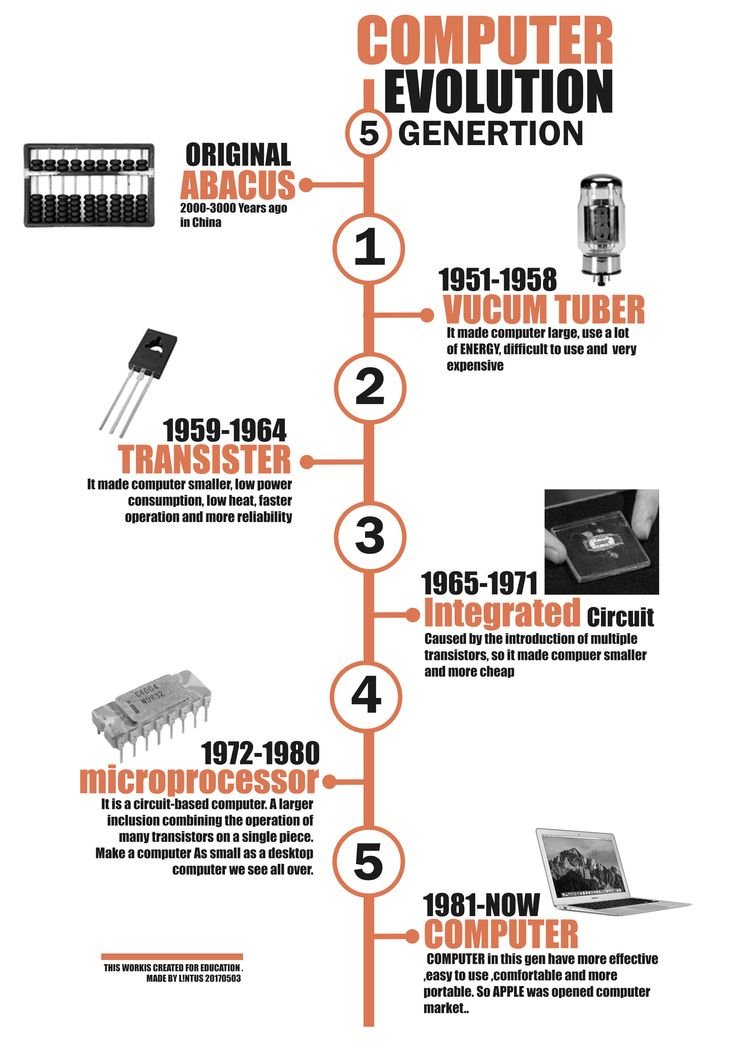
The development of electronic computers during the 20th century introduced a new era of technological innovation. Early computers were large and expensive machines mainly used for scientific calculations, military applications, and data processing.
The invention of the transistor, integrated circuits, and microprocessors gradually made computers smaller, faster, and more affordable.
Personal computers eventually entered homes, schools, and workplaces, changing how people processed information and performed everyday tasks.
9. The Internet and Digital Revolution
The Internet transformed technology and communication on a global scale. It allowed computers and networks around the world to exchange information rapidly.
The World Wide Web made online information accessible to ordinary users. Websites, email, search engines, online shopping, and social media changed communication, education, entertainment, and business.
The digital revolution also created entirely new industries and business models.
10. Smartphones and Connected Technology
Smartphones brought powerful computing capabilities into people’s hands. Modern smartphones combine communication, photography, navigation, entertainment, online services, and computing in a single device.
Mobile applications have transformed banking, education, shopping, transportation, healthcare, and social interaction.
At the same time, connected devices and the Internet of Things have allowed everyday objects such as vehicles, appliances, watches, and industrial equipment to communicate and exchange data.
11. Cloud Computing and Big Data
Cloud computing changed how information and digital services are delivered. Users can now access storage, software, and computing resources through the Internet rather than relying entirely on local hardware.
The rapid growth of digital activity has also created enormous amounts of data. Big data technologies help organizations analyze information, identify patterns, and make better decisions.
Together, cloud computing and data analytics have become essential components of modern digital infrastructure.
12. Artificial Intelligence and Automation
Artificial intelligence represents one of the latest and most significant stages in the evolution of technology. AI systems can process large amounts of information, recognize patterns, understand language, generate content, and assist with complex tasks.
Machine learning, generative AI, robotics, and automation are increasingly being used in healthcare, finance, education, manufacturing, transportation, and software development.
AI is changing the relationship between humans and machines by enabling computers to perform increasingly sophisticated tasks.
13. The Future of Technological Evolution
The evolution of technology is far from complete. Emerging fields such as quantum computing, advanced robotics, biotechnology, renewable energy, autonomous systems, and next-generation communication networks could create significant changes in the coming years.
These technologies may improve healthcare, transportation, energy, scientific research, and communication. At the same time, society will need to address important issues such as cybersecurity, privacy, employment, misinformation, and the responsible development of artificial intelligence.
Future progress will require a balance between innovation and responsibility.
Conclusion
The evolution of technology reflects humanity’s constant desire to solve problems and improve life. From primitive tools and agriculture to electricity, computers, the Internet, smartphones, cloud computing, and artificial intelligence, every technological era has created new possibilities.
Technology has transformed not only the tools people use but also the way societies communicate, work, learn, conduct business, and interact with the world.
As technology continues to evolve, the future will bring both opportunities and challenges. The most successful technological progress will be driven not only by powerful inventions but also by responsible innovation, human creativity, and a clear understanding of how technology can benefit society.
The journey from simple tools to artificial intelligence is a remarkable example of what humans can achieve—and it is only the beginning of the next chapter in technological history.