Information Technology in Business: How IT Is Transforming Modern Businesses in 2026

Information technology has become one of the most important foundations of modern business. From small startups to global enterprises, businesses rely on technology to communicate with customers, manage operations, analyze data, protect information, and develop new products and services. In 2026, the role of Information Technology in Business is no longer limited to computers and software. It has become a strategic tool for improving productivity, reducing costs, increasing security, and creating competitive advantages.
As artificial intelligence, cloud computing, automation, cybersecurity, and data analytics continue to evolve, businesses that use information technology effectively can respond faster to changing market conditions and customer expectations.
What Is Information Technology in Business?
Information Technology in Business refers to the use of computers, software, networks, digital systems, cloud platforms, and other technologies to support business activities.
IT helps organizations collect, store, process, manage, and share information. It can be used in almost every department, including finance, marketing, human resources, sales, customer service, production, and management.
Modern businesses use IT systems to automate repetitive tasks, maintain business records, communicate with employees and customers, and make decisions based on reliable data.
Why Information Technology Is Important for Business
Information technology plays a central role in improving the way businesses operate. One of its biggest advantages is that it allows companies to perform tasks faster and more efficiently.
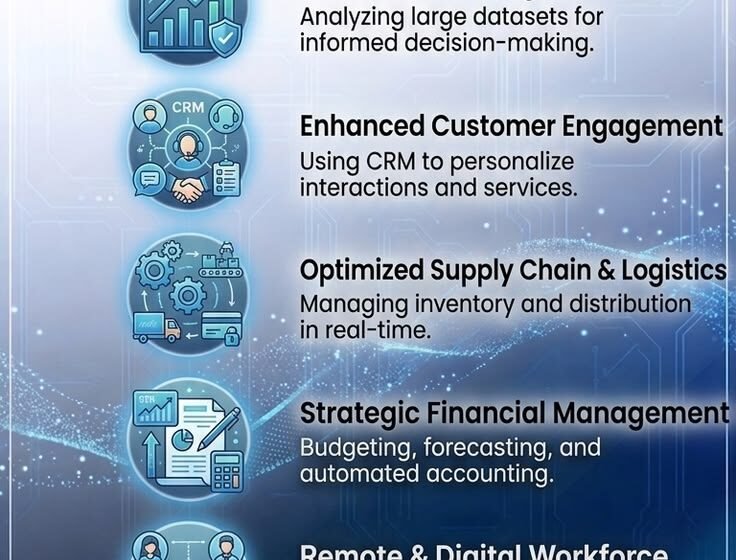
For example, businesses can use digital accounting systems instead of maintaining financial records manually. Customer relationship management platforms can organize customer information, while project management tools can help teams coordinate their work.
IT also allows businesses to operate across geographical boundaries. Employees can communicate through video meetings, cloud-based applications, and collaboration platforms regardless of their physical location.
The Role of Artificial Intelligence in Business
Artificial intelligence is becoming an important part of modern information technology. Businesses are using AI-powered systems for customer support, data analysis, content creation, forecasting, fraud detection, and process automation.
AI can analyze large amounts of information much faster than traditional manual methods. This can help businesses identify patterns, understand customer behavior, and support decision-making.
However, businesses still need responsible implementation. Human oversight, data quality, privacy, transparency, and cybersecurity remain important considerations when adopting AI technologies.
Cloud Computing and Modern Business Operations
Cloud computing has changed how businesses store and access digital resources. Instead of depending entirely on physical servers and on-site infrastructure, organizations can use cloud platforms to access computing power, applications, databases, and storage through the internet.
Cloud technology can provide businesses with flexibility and scalability. A company can increase or reduce its technology resources according to its requirements.
Cloud-based systems can also support remote work and collaboration because employees can access authorized business applications and files from different locations.
Cybersecurity in Business
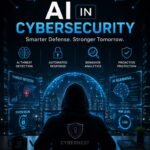
As businesses become more dependent on technology, cybersecurity has become a critical part of Information Technology in Business.
Companies store valuable information such as customer records, financial data, employee information, intellectual property, and business documents. Cyberattacks, phishing, ransomware, data breaches, and other threats can cause significant operational and financial problems.
Businesses therefore need strong cybersecurity practices, including secure authentication, access controls, regular software updates, employee security training, data backups, and continuous monitoring.
Cybersecurity should not be treated only as an IT department responsibility. Every employee who uses a company’s digital systems has a role in protecting business information.
Data Analytics and Business Decision-Making
Data has become one of the most valuable resources for modern organizations. Businesses generate information through websites, applications, sales systems, customer interactions, and digital marketing campaigns.
Information technology allows businesses to organize and analyze this data. Data analytics tools can help organizations understand sales trends, customer preferences, operational performance, and market behavior.
Instead of relying only on assumptions, managers can use data-driven insights to make more informed business decisions.
Automation and Business Productivity
Automation is another major benefit of information technology. Businesses can automate repetitive processes such as invoice processing, email notifications, inventory updates, appointment scheduling, and certain customer-service tasks.
Automation can save time and allow employees to focus on more complex and creative responsibilities.
When implemented correctly, automation can also reduce human errors and create more consistent business processes.
Information Technology in Marketing
Digital technology has transformed business marketing. Companies can now use websites, search engines, social media, email marketing, online advertising, and analytics platforms to reach specific audiences.
Information technology also provides marketers with valuable performance data. Businesses can measure website traffic, engagement, conversions, and customer behavior to understand which strategies are producing results.
This makes digital marketing more measurable and adaptable than many traditional marketing methods.
IT and Customer Experience
Customer expectations are changing rapidly in the digital age. People expect businesses to provide fast communication, convenient services, secure transactions, and easy access to information.
Businesses can use technology to improve customer experiences through mobile applications, online ordering systems, chatbots, personalized recommendations, digital payment systems, and customer support platforms.
A well-designed technology strategy can make interactions more convenient while helping businesses understand and respond to customer needs.
The Future of Information Technology in Business
The future of Information Technology in Business will likely be shaped by continued developments in artificial intelligence, cloud computing, cybersecurity, automation, data analytics, and connected technologies.
Businesses will increasingly focus on integrating these technologies rather than using them as completely separate systems. AI can work with business data, cloud platforms can provide scalable infrastructure, and cybersecurity technologies can help protect increasingly connected digital environments.
At the same time, businesses will need skilled employees who understand both technology and business objectives. Technology alone does not guarantee success. Effective planning, responsible implementation, employee training, and continuous improvement are equally important.
Conclusion
Information Technology in Business has become essential for organizations operating in the modern digital economy. It helps businesses improve productivity, manage information, communicate effectively, understand customers, strengthen security, and develop innovative products and services.
In 2026, technologies such as artificial intelligence, cloud computing, automation, cybersecurity, and data analytics are creating new opportunities for businesses across different industries.
The most effective approach is not simply to adopt every new technology, but to select technologies that solve real business problems and create measurable value. With the right strategy, information technology can become a powerful foundation for sustainable business growth and digital transformation.